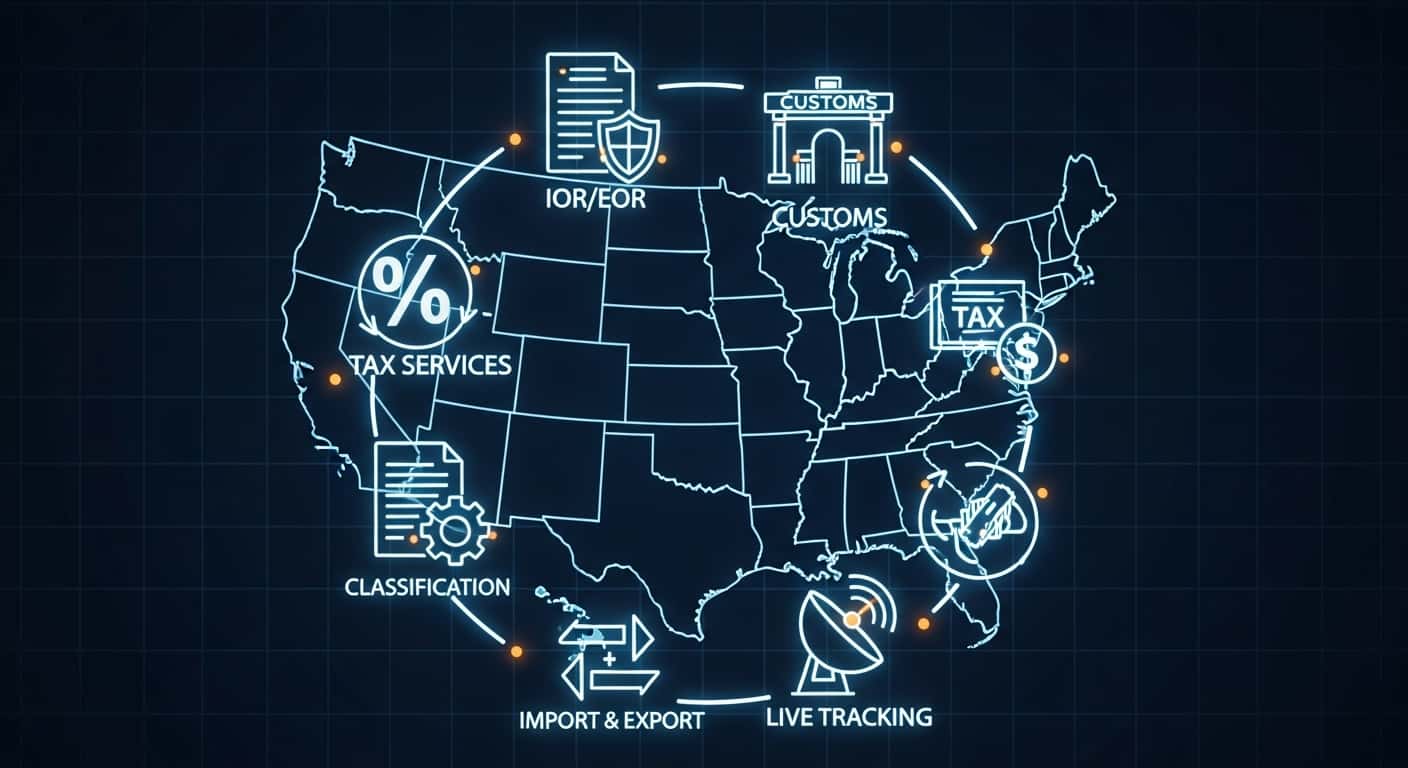
Importing high-tech equipment into the United States is never straightforward. U.S. Customs and Border Protection (CBP) enforces strict compliance requirements covering classification, ECCN licensing, bonds, and recordkeeping. For international businesses without a U.S. entity, this complexity can stall operations, increase costs, and risk shipment seizures.
At IOR/EOR, we simplify U.S. imports and exports by acting as your Importer of Record (IOR) and Exporter of Record (EOR). From managing CBP documentation to paying duties and securing bonds, our team ensures your IT, telecom, medical, and aviation shipments clear customs smoothly, legally, and on time.
U.S. regulations require that a legally recognized Importer of Record (IOR) or Exporter of Record (EOR) be designated for cross-border shipments. Under Customs and Border Protection (CBP) rules, the IOR/EOR assumes legal liability for ensuring shipments comply with U.S. trade and customs laws.
Indicator | Value |
|---|---|
VAT/GST | None federally; state sales tax applies |
Average Import Duty | 0–37.5% depending on product |
Clearance Time | 1–5 working days |
Required for most imports | |
Top Import Sectors | IT, telecom, medical, automotive |
You require an IOR/EOR if:
You have no U.S. registered legal entity
Importing regulated goods (IT, telecom, medical, aviation)
CBP requires a bond and compliance filings
You need temporary imports (RMA, repairs, exhibitions)
You want to avoid customs delays and penalties
Sector | Compliance Needs | IOR/EOR Role |
|---|---|---|
IT & Telecom | FCC certification, ECCN classification, and encryption permits | Secure licenses, classify goods, and handle import bonds. |
Aviation | FAA approvals, safety compliance for parts & equipment | Ensure regulated parts meet import/export standards. |
Medical | FDA clearance, strict product labeling & documentation | Manage FDA filings, import permits, and records. |
Automotive | DOT compliance, emissions, and safety standards | HS code classification, duties, and compliance checks. |
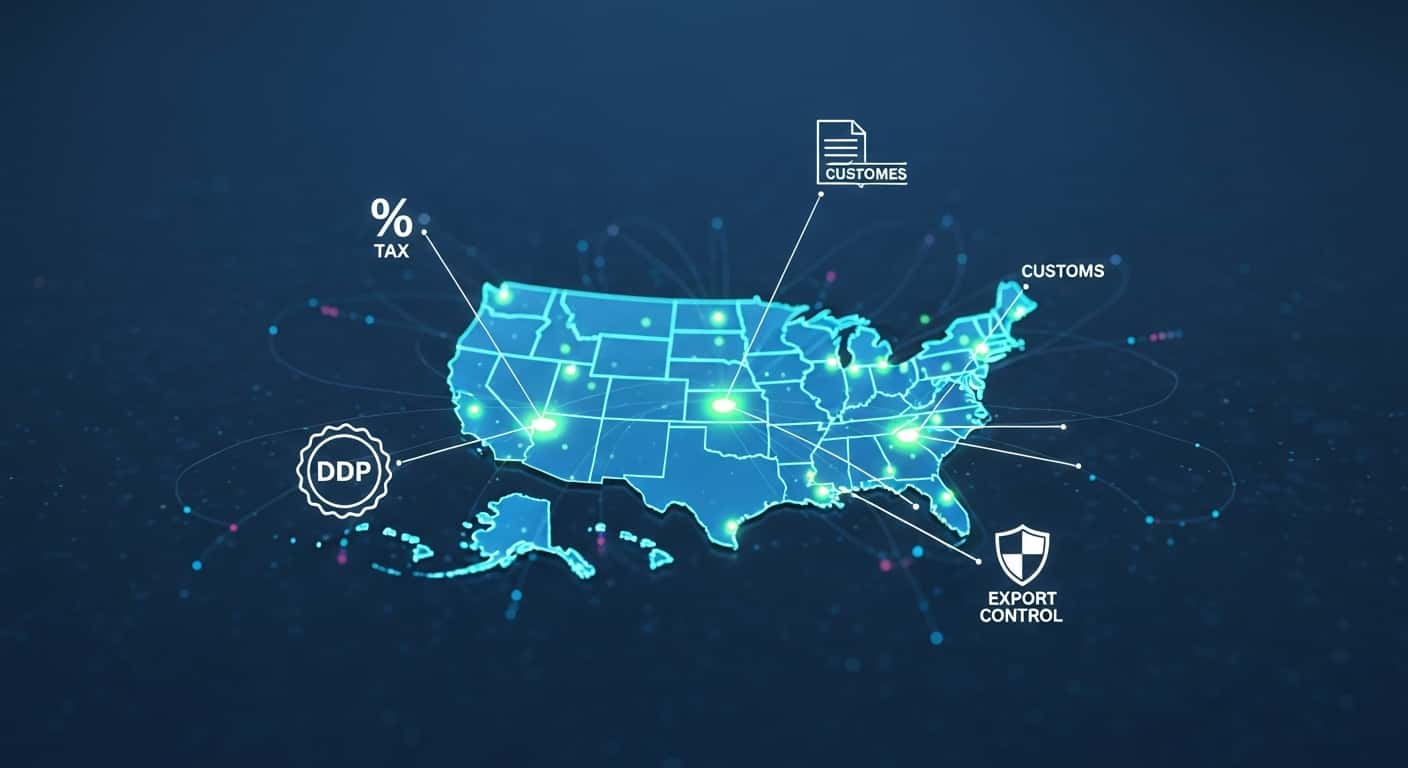
Importing into the U.S. requires careful handling of taxes, duties, and CBP bonds. With Delivered Duty Paid (DDP), IOR/EOR makes costs predictable and compliance simple. Here’s what importers need to know:

No federal VAT — state-level sales and use taxes apply
Duties vary by product category
CBP bonds required for most shipments
With DDP, IOR/EOR pays duties, taxes, and bonds upfront
Enter your email to receive the PDF download link.

Acting as your U.S. legal representative (IOR/EOR)
HS & ECCN classification
Duties/tax payment & CBP bond management
Export filings & compliance reports
Support for temporary imports/re-exports
Real-time shipment tracking
Deep expertise in CBP, ECCN, FCC, and FDA compliance.
Simplifies U.S. trade operations under one provider.
Enter the U.S. market without setting up a company.
From classification and bonds to clearance and delivery.
Full supply chain visibility at every stage.
Case studies across IT, telecom, aviation, and medical industries.

Navigating U.S. imports without a trusted partner exposes your business to compliance risks and delays.
With IOR/EOR, you get seamless customs clearance, tax handling, and sector-specific expertise for all U.S. shipments.
Not in every case. Some shipments may clear under the consignee’s details if all compliance obligations are met. However, for regulated products, bonded shipments, or non-U.S. entities, an IOR is required to assume legal responsibility.
Yes—if your company has a registered U.S. legal entity and the resources to handle CBP compliance, recordkeeping, and payment of duties/taxes. Without a U.S. entity, you must appoint a third-party IOR.
Standard clearance takes 1–5 working days depending on the shipment type, documentation accuracy, and whether goods require inspection or agency approval (e.g., FDA, FCC).
Generally no. A freight forwarder’s role is logistics and transportation, not legal liability. They can only act as IOR if they formally assume compliance responsibilities, which most do not.