Expanding into China opens the door to the world’s largest consumer and technology market—but it also comes with one of the most intricate regulatory frameworks on the globe. From CCC certification and MOFCOM trade rules to GACC clearance requirements, even the smallest misstep can result in costly delays or rejections.
Under Chinese customs law, the Importer and Exporter of Record carry full legal and compliance responsibility for ensuring shipments meet all regulatory requirements. Their duties typically include:
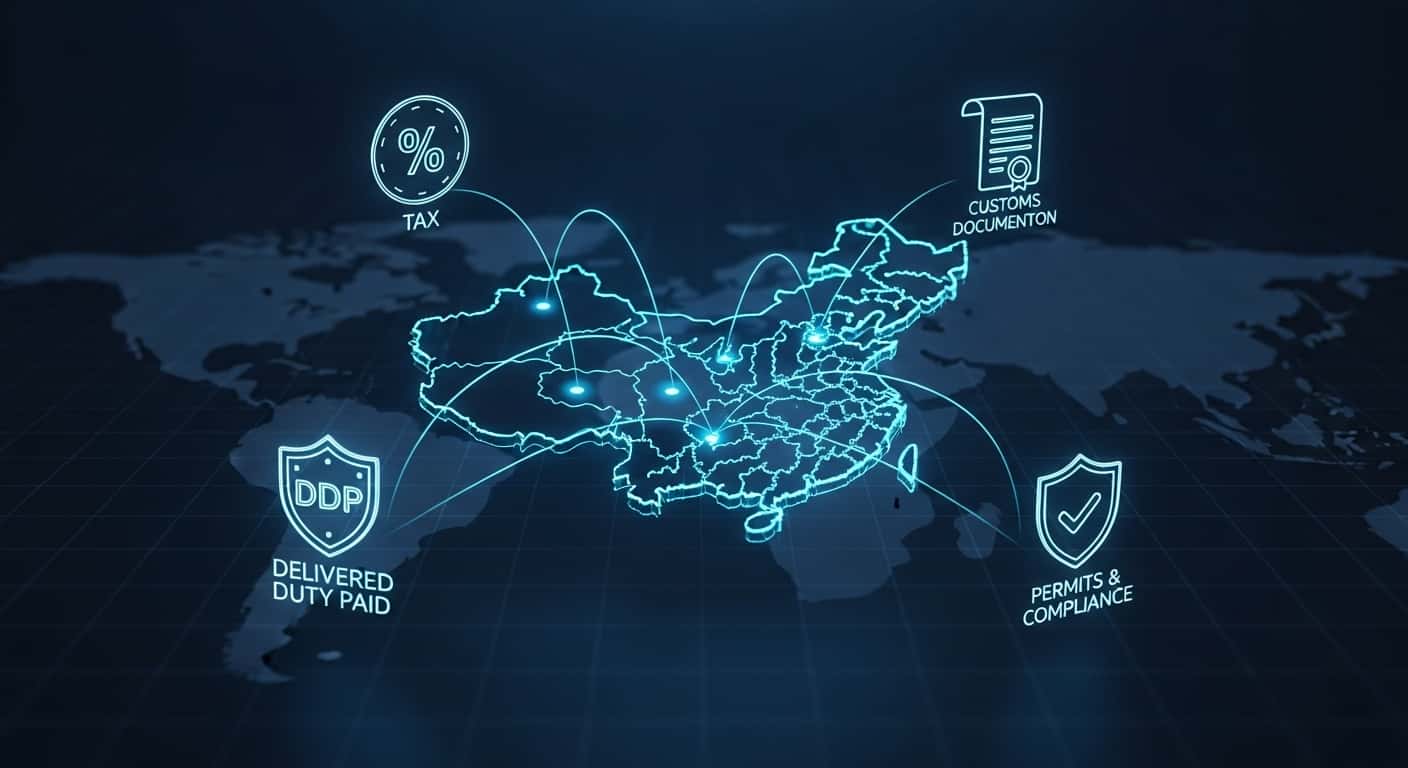
Register as IOR/EOR - act as the official importing/exporting entity.
Prepare Documentation - invoices, shipping documents, HS codes, certifications.
Handle Duties & Taxes - pay customs tariffs, duties, and 13% VAT.
Obtain Product Approvals - CCC for telecom, CFDA for medical, CAAC for aviation.
Maintain Compliance Records - keep audit-ready documentation for inspections.
Indicator | Value |
|---|---|
VAT | 13% (standard), reduced rates apply |
Import Duties | 0–20% depending on HS code |
Clearance Time | 3–7 business days |
CCC Certification | Mandatory for many IT/telecom goods |
Used Goods | Prohibited |
Top Import Hubs | Shanghai, Shenzhen, Beijing |
Not every shipment requires an Importer or Exporter of Record, but in many situations, appointing one is the only way to stay compliant and avoid delays. Common scenarios include:
No local entity in China:Only an IOR/EOR can legally act as the importer or exporter.
IT & Telecom equipment imports: Products often require CCC certification before customs release.
Medical devices:Clearance depends on CFDA approval and proper labeling.
Aviation equipment:Shipments must meet CAAC airworthiness and safety regulations.
Returns and RMA shipments: An IOR ensures seamless re-entry and compliance.
Risk prevention:Avoid fines, shipment rejection, or costly delays at customs.
If any of these apply to your business, you likely need an IOR/EOR partner to ensure shipments into China clear smoothly and legally.
Sector | Needs & Support |
|---|---|
IT & Telecom | CCC certification, Radio Frequency approvals, HS classification |
Medical Devices | CFDA permits, labeling compliance, VAT/duty handling |
Aviation | CAAC safety certifications, airworthiness approvals |
Automotive | Import permits, clearance of digital & testing equipment |
Importing into China requires navigating multiple layers of taxation and compliance. Key considerations include:

Value-Added Tax (VAT)
13% standard rate; reduced rates apply to certain categories
Customs Duties
Typically 0–20%, depending on HS Code
Excise Taxes
Levied on specific goods in addition to VAT and duties
Enter your email to receive the PDF download link.

Legal representation for imports and exports
Customs clearance with GACC
Payment of duties, tariffs, and VAT (13% standard rate)
Product certifications: CCC (IT & telecom), CFDA (medical), CAAC (aviation)
Export declarations and license applications
Temporary imports and re-exports
End-to-end shipment tracking and visibility
Expertise in China’s strict IT, medical, and aviation compliance.
We act as your importer/exporter in China.
One partner for both imports and exports.
From paperwork to last-mile delivery.
Full shipment visibility at every stage.

China is a market full of opportunity—don’t let customs barriers slow you down. IOR/EOR takes care of the compliance, so you can focus on scaling your business with confidence.
The Importer of Record (IOR) is the legal entity responsible for ensuring goods comply with Chinese customs regulations. This includes handling documentation, paying duties and taxes, and assuming liability for the shipment.
The China Compulsory Certification (CCC) is mandatory for many IT, telecom, and consumer products. It confirms that products meet Chinese safety and quality standards, and without it, shipments cannot be cleared or sold in the country.
No. Only a local Chinese entity or an appointed IOR partner can take on this role. Foreign companies without a legal presence in China must work with an IOR to import goods.
No. Chinese law prohibits the import of second-hand or refurbished IT and electronic equipment. Only new products that meet certification requirements are permitted.
Clearance usually takes 3–7 business days, depending on the type of goods and required certifications. Missing documents or errors can lead to longer delays.
Typical requirements include: a commercial invoice, packing list, bill of lading, HS code declaration, and certifications such as CCC, CFDA, or CAAC, depending on the product.